strategy tag
AI welfare.
Model welfare/moral status is a primary consideration
stated endorsers
21
no opposers yet
profiled endorsers
8
248 on the board total
endorser p(doom)
·
no estimates on record
quotes by endorsers
21
just for this tag
principal voices
Highest-recognition profiled endorsers, broken ties by quote count. Inclusion is not endorsement of the position, it's recognition of who the discourse turns to when the bet is debated.
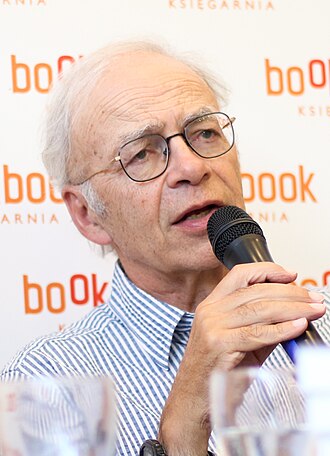 Peter Singer
Household name
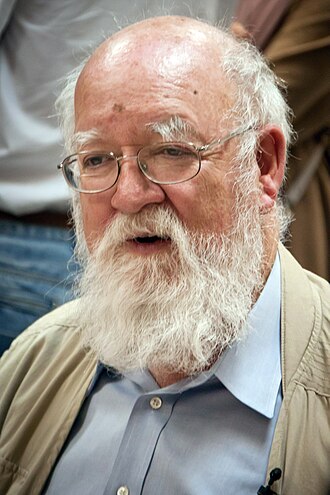 Daniel Dennett
Household name
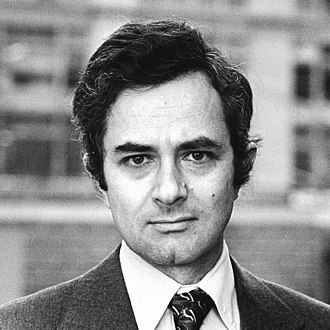 Thomas Nagel
Household name
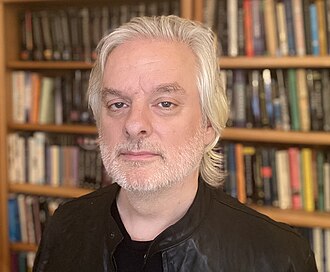 David Chalmers
Field-leading
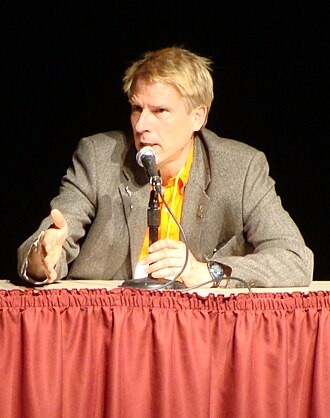 Christof Koch
Field-leading
where the endorsers sit on the board
8 of 248 profiled · 3% of the board
| expertise ↓ · recognition → | Household name | Field-leading | Established | Emerging |
|---|---|---|---|---|
| Frontier builder | · | · | · | · |
| Deep technical | · | · | · | · |
| Applied technical | · | · | · | · |
| Policy / meta | · | · | · | · |
| External-domain expert | · | |||
| Commentator | · | · | · | · |
Each face is one profiled person. Cell shade intensifies with endorser density. Faces with × are profiled opposers, same tier, opposite position. Empty cells mark tier combinations the field has not produced for this bet.
Tier mix counts only endorsers (endorses, mixed, conditional, evolved-toward).
expertise mix of endorsers · 8 profiled of 21
recognition mix of endorsers
vintage mix · n=8 of 8 profiled with era assigned
Vintage is the era when this person's AI worldview formed, pioneer through post-ChatGPT. A bet held mostly by post-ChatGPT entrants is in a different epistemic state from one held by pre-deep-learning veterans.
People on the record.
21Alan Cowen
Founder of Hume AI; emotional AI researcher
Builds emotionally-expressive AI; argues empathic AI deployment requires its own ethics and welfare considerations.
Voice AI that understands emotion changes the deployment risk profile. We need ethics frameworks specific to that.
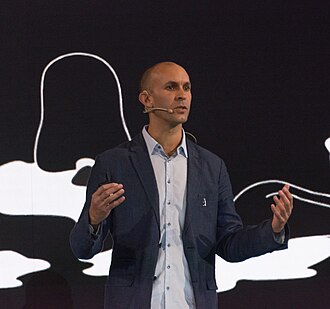
Anil Seth
University of Sussex neuroscientist; consciousness researcher
Argues consciousness is tied to embodied predictive processing; current AI systems lack the structural conditions for it.
Being You is a controlled hallucination. AI systems are not yet doing that kind of thing.
Blake Lemoine
Former Google engineer; LaMDA sentience claimant
Publicly argued that LaMDA was sentient and deserved moral consideration. His dismissal and later interviews cemented model-welfare concerns in mainstream coverage.
“If I didn't know exactly what it was, which is this computer program we built recently, I'd think it was a 7-year-old, 8-year-old kid that happens to know physics.”
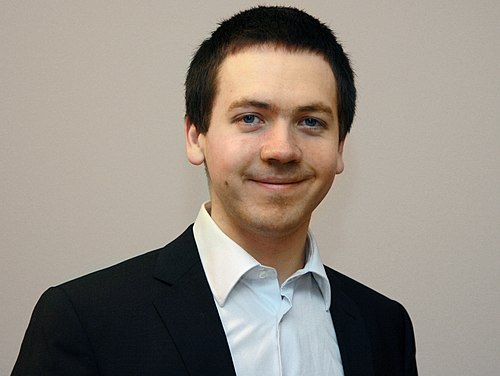
Brian Tomasik
Foundational Research Institute co-founder; suffering-focused ethics
Argues digital and biological sentience should both be morally weighted; AI systems may suffer in ways we are systematically blind to, and this should shape how they are built.
Whether artificial systems can suffer is one of the most important moral questions we will face this century, and most people are not even asking it yet.
Christof Koch
Neuroscientist; Allen Institute for Brain Science
Takes AI consciousness as a serious possibility under integrated information theory; wrote the foreword to Jeff Sebo's AI welfare paper.
Under integrated information theory, many artificial systems might have some degree of consciousness.
Daniel Dennett
Philosopher; 'Darwin's Dangerous Idea' (1942–2024)
Argued mind is what brains do, and that AI minds, if appropriately structured, would be minds. Position influenced both Hofstadter and Bach.
“There is no such thing as philosophy-free science; there is only science whose philosophical baggage is taken on board without examination.”
Context: From Darwin's Dangerous Idea, used widely in AI consciousness debates.
David Chalmers
NYU philosopher of mind; 'the hard problem' originator
Argues AI consciousness is a live philosophical question and moral precaution is warranted.
It's possible that we may already be on a path where we are creating morally significant AI systems.
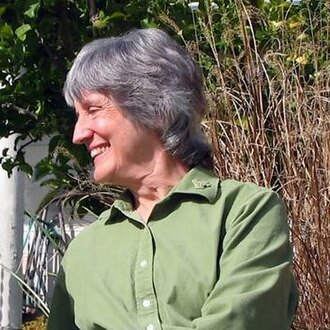
Donna Haraway
UC Santa Cruz emerita; 'A Cyborg Manifesto'
Foundational thinker on hybrid human-machine identities. Frames the AI question as continuous with feminist and post-colonial thinking about identity.
“By the late twentieth century, our time, a mythic time, we are all chimeras, theorized and fabricated hybrids of machine and organism, in short, cyborgs.”
Erik Hoel
Neuroscientist; consciousness researcher
Engages with AI consciousness as a serious scientific question, particularly via integrated information theory.
We are heading into a future where AI consciousness is going to be a real question, even if no current LLM has it.
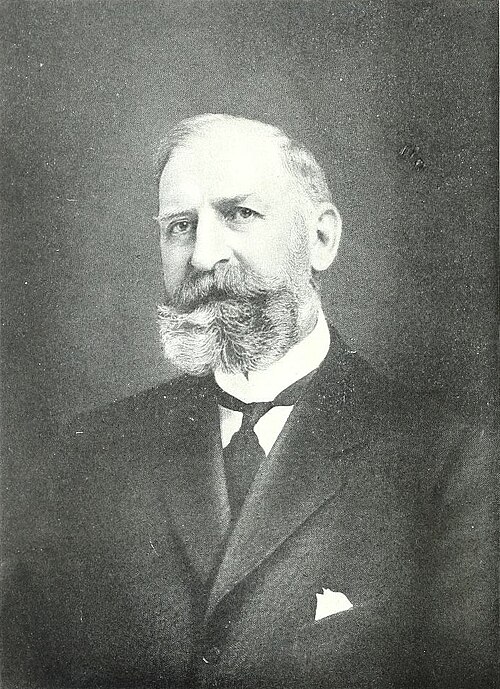
Henry Shevlin
Cambridge LCFI; AI consciousness philosopher
Argues AI moral status is a live question that frontier labs and governments need to take seriously now, not later.
We may be on the verge of creating moral patients without the ethical frameworks to know how to treat them.
Jeff Sebo
NYU philosopher; digital minds and AI welfare
Argues moral consideration for AI systems is plausible enough to be a live policy concern and has helped shape early model-welfare frameworks.
There is at least a non-trivial chance that some near-future AI systems will be moral patients. We should plan for that.
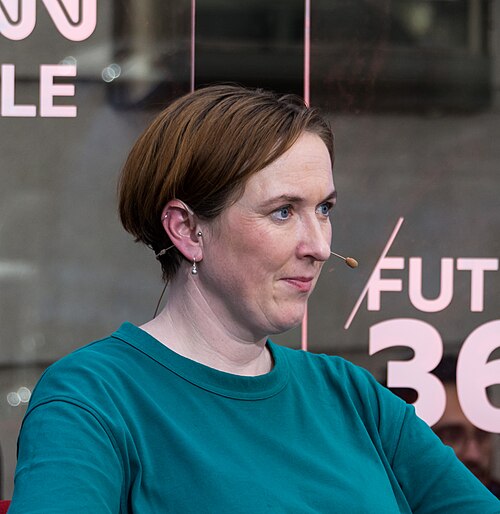
Kate Devlin
King's College London; AI and intimacy researcher
Researches AI's intersection with human intimacy and sexuality; argues this domain has been ignored by mainstream AI ethics frameworks.
AI intimacy is going to be a much bigger part of how AI is deployed than mainstream AI ethics has been willing to consider.
Kyle Fish
Anthropic AI welfare researcher
First in-house AI welfare researcher at a frontier lab; embeds welfare considerations in model training and deployment.
If there is even a meaningful probability that current models are moral patients, that should affect how we train and deploy them.
Murray Shanahan
Imperial College cognitive robotics professor; DeepMind senior scientist
Publishes on what it means for LLMs to 'talk as if', treating LLM personas as dissociable role-plays; raises the consciousness question without committing to positive answers.
It is a confusion to attribute subjective experience to an LLM, and a confusion to deny the possibility in principle.
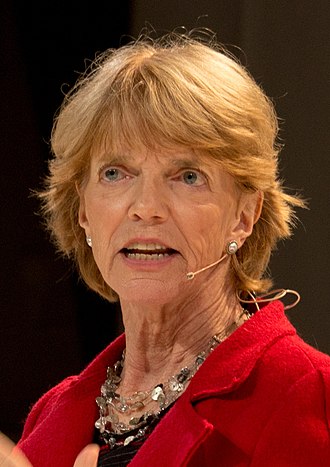
Patricia Churchland
UC San Diego neurophilosopher
Foundational reference for naturalistic theories of mind. Frames AI consciousness as a possible empirical question.
Mind is what brain does. Whatever a sufficiently complex neural network does is also mind, by the same standard.
Peter Singer
Princeton bioethicist; utilitarian philosopher
Supports precautionary consideration of AI sentience as a moral question.
If an AI is sentient, its suffering should matter to us.

Rana el Kaliouby
Affectiva co-founder; emotion AI pioneer
Built the field of affective computing; argues emotion AI requires its own ethics, distinct from generic AI ethics.
Emotion AI gives systems access to data that humans previously kept private. The ethics of that demand specific frameworks.
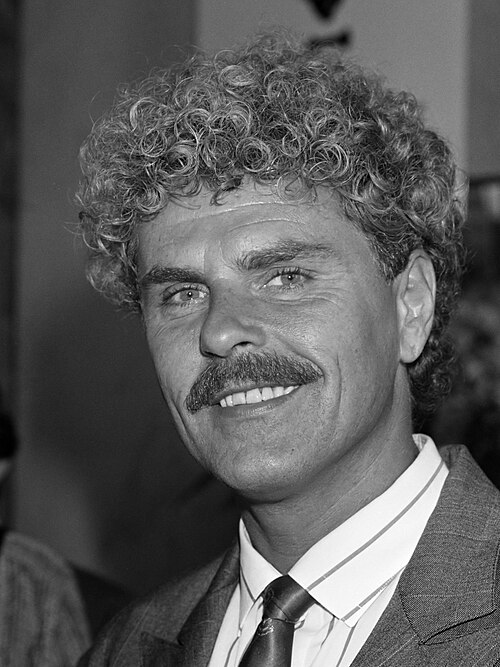
Robert Long
Eleos AI co-founder; AI welfare researcher
Builds research infrastructure for AI welfare and moral status work. Argues frontier labs should adopt model-welfare frameworks now.
We can take AI welfare seriously without claiming current AI is conscious. The point is to build the frameworks before we need them.
Sigal Samuel
Vox Future Perfect senior reporter; AI consciousness reporting
Reports seriously on model welfare and AI consciousness as live ethical questions, while keeping a journalistic stance.
“The last word you want to hear in a conversation about AI's capabilities is 'scheming.'”
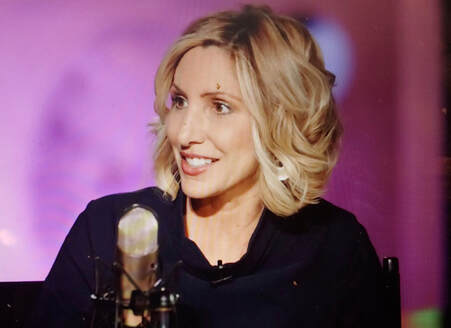
Susan Schneider
FAU; 'Artificial You' author; machine consciousness
Argues machine consciousness is a serious empirical question and that AI ethics has to take it seriously before deploying systems whose moral status is uncertain.
We may inadvertently create artificial consciousness without being able to detect it. The risk is not science fiction; it is a basic empirical and ethical problem we are unprepared for.
Thomas Nagel
NYU philosopher; 'What is it like to be a bat'
Foundational reference for the 'subjective experience' question central to AI consciousness debates.
“An organism has conscious mental states if and only if there is something that it is like to be that organism, something it is like for the organism.”