strategy tag
International treaty.
Arms-control-style treaty on frontier training or deployment
also known as: arms control
stated endorsers
18
no opposers yet
profiled endorsers
2
248 on the board total
endorser p(doom)
·
no estimates on record
quotes by endorsers
18
just for this tag
People on the record.
18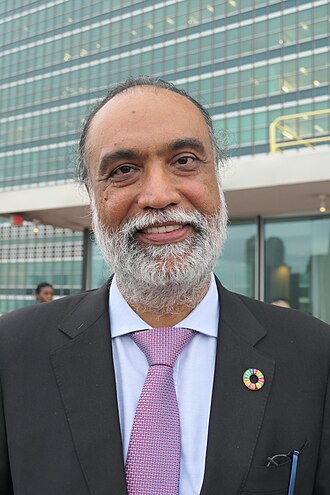
Amandeep Singh Gill
UN Secretary-General's Envoy on Technology
Leads UN-level AI coordination; argues AI governance needs global institutions built around inclusivity and scientific input.
International governance of AI must reflect all voices, not just the loudest national security voices.
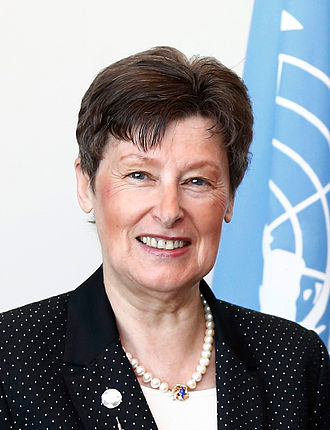
Angela Kane
Former UN High Representative for Disarmament Affairs
Argues the disarmament-treaty playbook should be applied to AI; signed the CAIS statement.
“Mitigating the risk of extinction from AI should be a global priority alongside other societal-scale risks such as pandemics and nuclear war.”
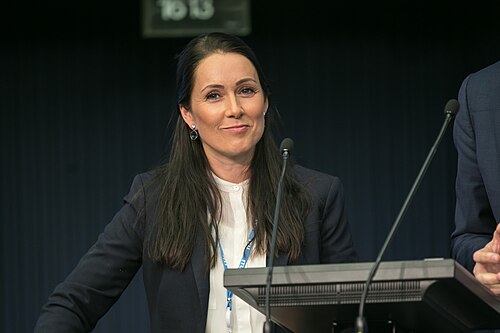
Anja Kaspersen
UN senior fellow; disarmament diplomat
Argues AI requires arms-control-style international verification mechanisms.
We built verification infrastructure for chemical and nuclear weapons. We can build it for AI, but only if we decide to.
Bletchley Declaration Signatories
First international AI Safety Summit signatories (2023)
First international statement acknowledging frontier AI risk as requiring cross-national coordination.
“There is potential for serious, even catastrophic, harm, either deliberate or unintentional, stemming from the most significant capabilities of these AI models.”

Brian Tse
Founder of Concordia AI; China AI safety
Builds dialogue capacity between Western and Chinese AI safety communities; argues productive US-China AI safety cooperation is feasible.
There is a real Chinese AI safety research community. Western governance conversations often miss it entirely.
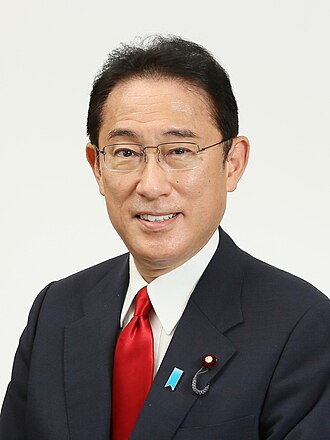
Fumio Kishida
Former Prime Minister of Japan (2021–2024); Hiroshima AI Process architect
Architect of the Hiroshima AI Process; pushed for Global South inclusion in international AI governance.
“Japan will take the lead in establishing international rule-making that will enable the entire international community, including the Global South, to enjoy the benefit of safe, secure, and trustworthy generative AI.”
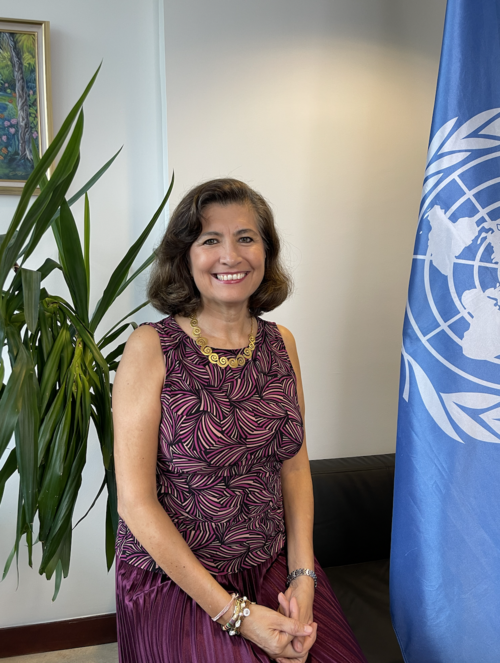
Gabriela Ramos
UNESCO Assistant Director-General for Social and Human Sciences
Led the first global UNESCO agreement on AI ethics, adopted unanimously by 193 member states in November 2021.
“Decisions impacting millions of people should be fair, transparent and contestable. These new technologies must help us address the major challenges in our world today.”
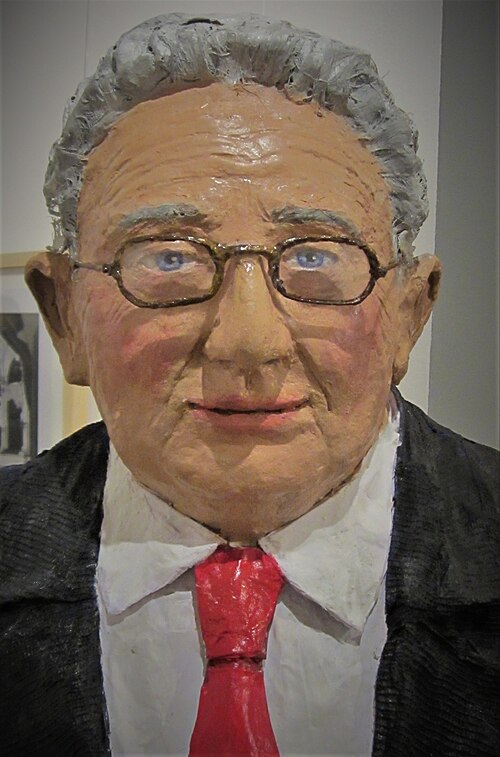
Henry Kissinger
Former U.S. Secretary of State; co-author 'The Age of AI'
Argued AI requires a new diplomatic framework comparable in scale to nuclear arms control; called for U.S.-China dialogue specifically on AI's strategic implications.
We need to start serious discussions about how to keep AI from running off into territories nobody wants to go. The challenge is not technological, it is the absence of any framework for international agreement.
Isabella Wilkinson
Chatham House international affairs AI researcher
Argues international coordination on AI, modelled on nuclear non-proliferation institutions, is the missing layer.
AI governance needs an IAEA-equivalent for frontier training.

Jeffrey Ding
George Washington University; ChinAI newsletter
Argues the diffusion of general-purpose AI capabilities across great-power blocs makes coordination (rather than racing) the more accurate frame for U.S.–China competition.
Whichever country gets superior AI is not necessarily the one that develops it first. The diffusion phase, how fast and broadly capabilities spread, matters more than the leading edge.
Jon Bateman
Carnegie senior fellow; AI and cyber strategy
Argues the U.S.–China AI relationship needs structured dialogue mechanisms, including arms-control-style confidence-building measures, before crisis dynamics force the issue.
The U.S. and China need a Biden-Xi-style dialogue track on AI specifically, not because we will agree on values, but because we cannot afford to crisis-manage on top of misperception.
Kati Suominen
Founder of Nextrade Group; AI trade policy
Argues AI governance should be integrated with trade-and-investment frameworks (USMCA, WTO).
Putting AI governance outside trade frameworks creates two regimes that will collide. Better to integrate them.
Robert Trager
Oxford Martin AI governance scholar
Argues verifiable compute accounting is the key primitive for any international AI treaty.
Verifiable compute accounting is the missing primitive for international AI governance. Without it, treaties have nothing to check.
Sara Hossein
International AI law scholar
Argues existing international human-rights frameworks can be extended to govern AI without inventing new institutions from scratch.
We already have human rights law. It applies to AI. What we are missing is enforcement infrastructure.
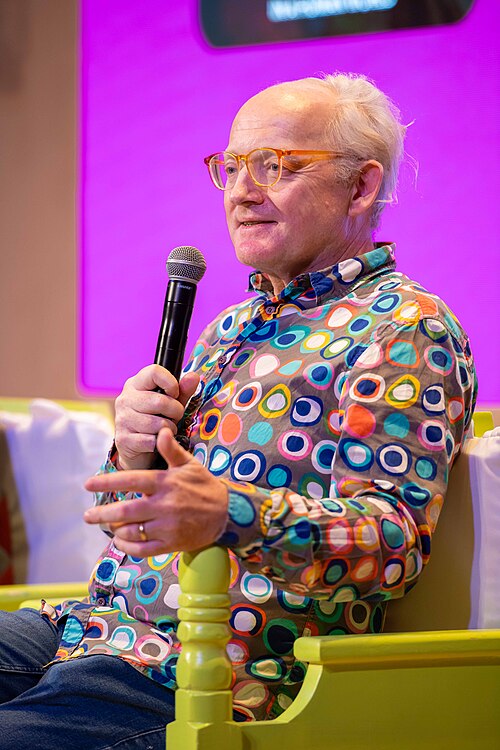
Toby Walsh
UNSW Sydney; AI safety advocate
Argues lethal autonomous weapons must be banned by international treaty, modeled on the 1990s ban on blinding lasers; co-organized 'killer robots' open letter with thousands of researcher signatures.
Killer robots will become the third revolution in warfare, after gunpowder and nuclear arms. They will fundamentally lower the threshold for armed conflict.
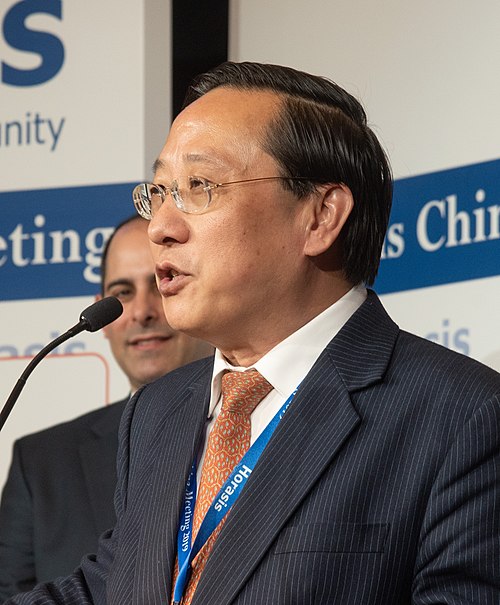
Victor Gao
Chinese diplomat; AI dialogue participant
Participates in US-China AI safety dialogues; publicly advocates for great-power coordination on AI.
The United States and China must find a way to cooperate on AI safety even as they compete economically.
Yi Zeng
Chinese Academy of Sciences; Brain-inspired Cognitive AI Lab director
Participant in US-China track II dialogues on AI safety.
AI safety should not be an area of geopolitical competition; it is a global public good.
Yuhwen Yang
Carnegie Endowment China AI research
Reports on Chinese AI ecosystem from sources US analysts often miss; argues mutual understanding is necessary for any international AI agreement.
Western AI policy debates often misread Chinese AI policy because they read English summaries rather than primary Chinese sources.