person
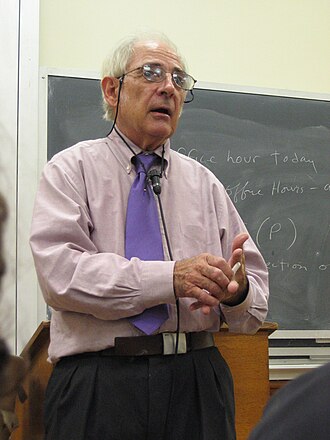
John Searle
UC Berkeley philosopher; Chinese Room Argument
Berkeley philosopher whose 1980 'Chinese Room' thought experiment is the canonical argument that symbol manipulation alone cannot produce understanding.
Profile
expertise
External-domain expert
Recognised expert outside AI (philosophy, economics, biology, journalism) who weighs in on AI consequences from that vantage.
UC Berkeley emeritus. Chinese Room argument (1980). Major philosophical critic of computational consciousness; some controversy.
recognition
Household name
Name recognition outside the AI/CS community. Featured by mainstream press, a Wikipedia page in many languages, a published bestseller, or holds a position the lay public knows.
Major figure in philosophy of mind.
vintage
Pioneer
Defining figure from before 1980. Cybernetics, formal computation, early AI laboratories. Their concept of intelligence is not bound to neural networks.
1932–. Chinese Room 1980. Foundational philosophy-of-mind work predates AI as discipline.
Hand-classified. See the board for the criteria and the full grid.
Strategy positions
AI skepticendorses
AGI risk narratives overstated; real harms are mundane and currentArgues syntax does not produce semantics. Foundational philosophical opposition to strong-AI claims, still cited against LLM-AGI framings.
Imagine a person who knows no Chinese sitting in a room with a rule book. Slips of paper with Chinese characters come in, the person uses the rule book to send appropriate slips back. The room passes the Turing test, but the person inside understands no Chinese.
Closest strategy neighbours
by jaccard overlapOther people whose strategy tags overlap with John Searle's. Overlap is on tag identity, not stance; opposites can show up if they reference the same tags.



Record last updated 2026-04-25.