strategy tag
Open-endedness.
Build AI via open-ended self-generated curricula; safety must follow from the dynamics
also known as: autocurricula
stated endorsers
6
no opposers yet
profiled endorsers
0
248 on the board total
endorser p(doom)
·
no estimates on record
quotes by endorsers
6
just for this tag
People on the record.
6
David Ha
Sakana AI co-founder; ex-Stability AI head of strategy
Argues evolutionary and open-ended search methods are an underexplored complement to gradient-based learning; co-founded Sakana to pursue them at scale, particularly for model-merging and discovery.
We are using evolutionary algorithms to discover better foundation model architectures by merging existing open-source models. The combinatorial space is vast, and pure scaling overlooks much of it.
Deepak Pathak
CMU; curiosity-driven exploration; humanoid robotics
Argues curiosity-driven exploration in physical environments is the path to general embodied intelligence; the same principles apply across simulation and real-world robots.
We propose curiosity-driven exploration where the agent is rewarded for visiting novel states. Without external reward, the agent acquires generalizable skills that transfer to tasks it has never been trained on.
Joel Lehman
Independent researcher; ex-OpenAI; novelty search
Argues open-ended search and machine creativity are essential capabilities for AI to be reliably useful in scientific research; views this as a more honest framing than 'AGI'.
Open-ended search is not a luxury feature for AI. It is what scientific discovery actually looks like, and any AI that wants to do science has to do open-ended search.
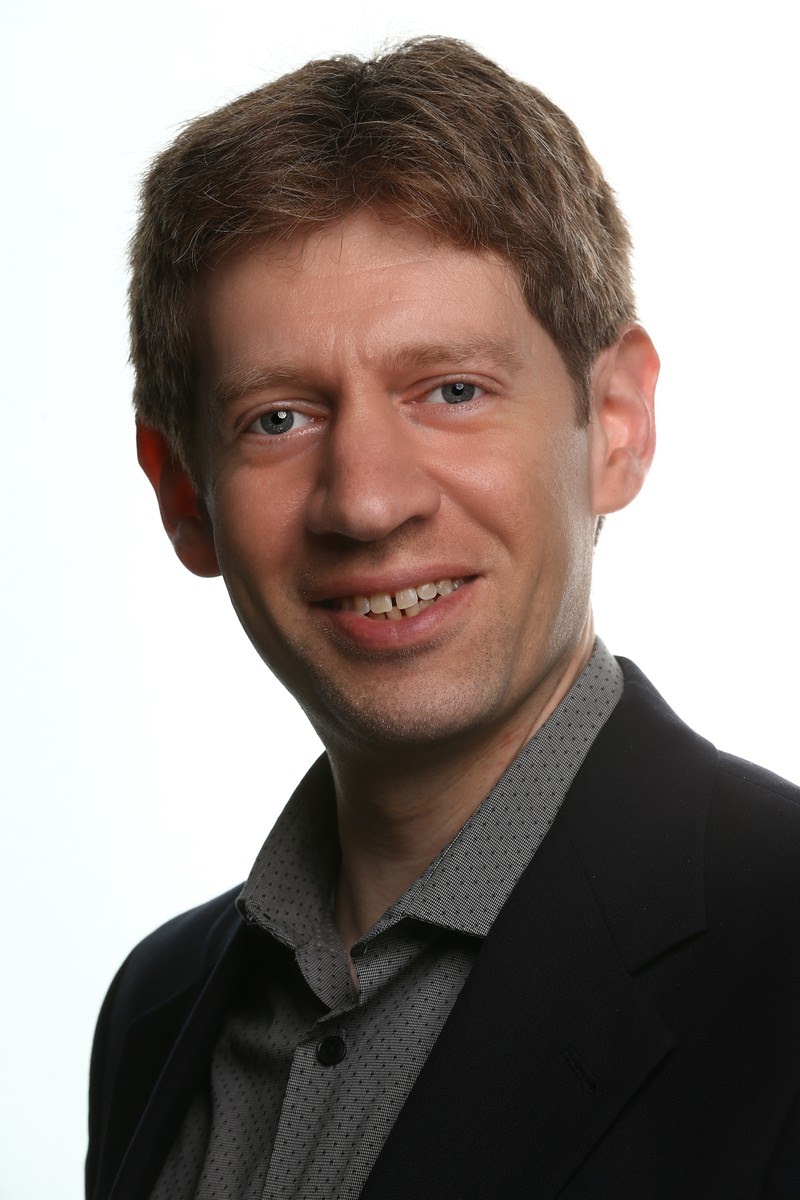
Kenneth O. Stanley
Maven; ex-OpenAI; novelty search and open-endedness
Argues open-ended search, pursuing novelty rather than fitness toward an objective, is how genuine creativity arises; treats this as a deep clue about how to build intelligence.
The biggest discoveries are not made by those who chase the goal directly, but by those who chase novelty. Greatness cannot be planned, and AI search procedures should reflect that.
Pierre-Yves Oudeyer
Inria; developmental AI and curiosity
Argues developmental AI, agents that learn open-endedly through curiosity rather than via fixed objectives, is the right framing for studying how intelligence actually arises.
Curiosity-driven exploration is what lets a developing system invent its own learning curriculum. Without it, you cannot study how an agent goes from blank slate to general competence.
Tim Rocktäschel
Google DeepMind / UCL; open-ended learning
Argues that open-ended learning, agents generating their own challenges in increasingly complex environments, is a critical path toward general capabilities, and a key surface for safety research.
Open-ended learning is the missing ingredient: systems that can perpetually invent new tasks for themselves and solve them are how we get capable, general AI.