strategy tag
Democratic mandate.
Decisions about AI must come through democratic processes
stated endorsers
8
no opposers yet
profiled endorsers
1
248 on the board total
endorser p(doom)
·
no estimates on record
quotes by endorsers
8
just for this tag
People on the record.
8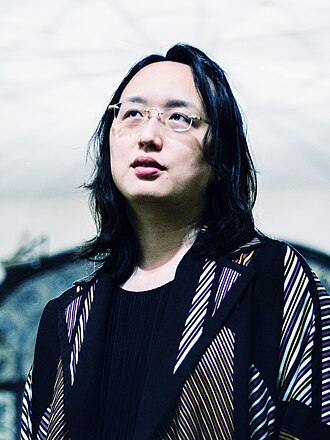
Audrey Tang
First Digital Minister of Taiwan; pluralism and civic tech
Argues AI governance must be built from deliberative democracy primitives, alignment assemblies, pol.is-style consensus, plurality of models.
“When we see the Internet of Things, let's make it an Internet of Thee. When we see machine learning, let's make it collaborative learning. Whenever a singularity is near, let us always remember the plurality is here.”
Context: Her first self-description as Digital Minister.
Aviv Ovadya
Berkman Klein Center; platform democracy
Works on civic deliberation infrastructure as a response to AI-enabled democratic pressure.
AI's threat to democracy is about what happens to shared knowledge infrastructure, not about individual deepfakes.

Danielle Allen
Harvard political theorist; Allen Lab on AI and democracy
Argues AI governance must be built on a robust democratic theory; technical fixes are not sufficient.
AI governance is not just a technical problem. It is a fundamental democratic question about who decides.
Divya Siddarth
Director of the Collective Intelligence Project
Operates alignment assemblies with Anthropic, OpenAI, and governments as practical infrastructure for democratic input into AI.
Alignment without legitimacy is authoritarianism with extra steps. Democratic input is part of the engineering problem.

E. Glen Weyl
Microsoft Research economist; Plurality co-author
Co-authored Plurality: The Future of Collaborative Technology and Democracy, arguing pluralistic tools should underlie AI governance.
AI is not fundamentally a technology. It is a governance regime. The only durable AI governance is plural.
Martin Tisné
AI Collaborative; managing director
Argues data and AI governance must be subject to democratic processes that include workers, citizens, and affected communities, not negotiated solely between firms and regulators.
If we want a democratic AI future, we have to design participatory governance from the start. Otherwise we end up with whatever incumbents quietly negotiate behind closed doors.
Renata Ávila
Open Future CEO; digital rights lawyer
Argues AI governance must centre digital commons and public-interest digital infrastructure.
The digital commons, open models, open datasets, open infrastructure, is the sovereign ground for AI governance in the Global South.
Saffron Huang
Collective Intelligence Project co-founder
Advocates for citizen-deliberation input into AI policy and pre-deployment evaluation.
People who do not work in AI labs have legitimate stakes in AI decisions and should have structured input, not just consultation theatre.