strategy tag
Antitrust primacy.
Break concentration via competition law
stated endorsers
15
no opposers yet
profiled endorsers
4
248 on the board total
endorser mean p(doom)
15%
n=1 · median 15%
quotes by endorsers
16
just for this tag
principal voices
Highest-recognition profiled endorsers, broken ties by quote count. Inclusion is not endorsement of the position, it's recognition of who the discourse turns to when the bet is debated.
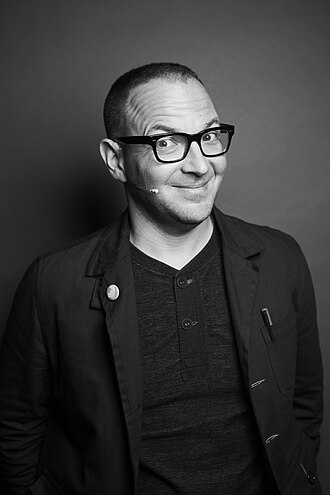 Cory Doctorow
Household name
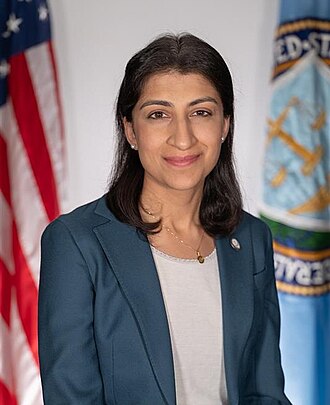 Lina Khan
Household name
 Tim O'Reilly
Household name
 Meredith Whittaker
Field-leading
where the endorsers sit on the board
4 of 248 profiled · 2% of the board
| expertise ↓ · recognition → | Household name | Field-leading | Established | Emerging |
|---|---|---|---|---|
| Frontier builder | · | · | · | · |
| Deep technical | · | · | · | · |
| Applied technical | · | · | · | · |
| Policy / meta | · | · | ||
| External-domain expert | · | · | · | · |
| Commentator | · | · | · | · |
Each face is one profiled person. Cell shade intensifies with endorser density. Faces with × are profiled opposers, same tier, opposite position. Empty cells mark tier combinations the field has not produced for this bet.
Tier mix counts only endorsers (endorses, mixed, conditional, evolved-toward).
expertise mix of endorsers · 4 profiled of 15
recognition mix of endorsers
vintage mix · n=4 of 4 profiled with era assigned
Vintage is the era when this person's AI worldview formed, pioneer through post-ChatGPT. A bet held mostly by post-ChatGPT entrants is in a different epistemic state from one held by pre-deep-learning veterans.
People on the record.
15
Carl Shapiro
UC Berkeley economist; antitrust and innovation
Argues AI antitrust analysis must take seriously the platform-and-network effects that have shaped earlier tech markets.
Network effects don't disappear because the technology is AI. If anything, they intensify.

Chris Hughes
Facebook co-founder turned antitrust advocate
Argues the same antitrust analysis that should apply to Facebook applies to today's AI labs and clouds; concentration of decision-making over a foundational technology is itself a democratic harm.
It is time to break up Facebook. The same logic should apply to AI clouds: when a small number of companies control critical infrastructure, government has to step in.
Cory Doctorow
EFF special advisor; 'enshittification' coiner
Argues the actual AI policy question is about competition, labour, and interoperability, not existential risk.
“AI cannot do your job, but an AI salesman can 100 percent convince your boss to fire you and replace you with an AI that can't do your job.”
“AI is the asbestos we are shoveling into the walls of our society and our descendants will be digging it out for generations.”

John Naughton
Cambridge / Open University; Observer technology columnist
Argues big-tech concentration is the structural problem that AI hype is being used to obscure; calls for breaking up incumbents as a precondition to credible AI governance.
AI is the latest move in a longer game, corporate concentration in the digital economy. The right policy response begins with antitrust, not AI-specific regulation.
Lina Khan
Former chair of the FTC
Argues concentration in AI infrastructure and deployment requires aggressive antitrust enforcement.
We know that moments of technological transition can lead to enormous consolidation, and moments of transition are also when the right policy can keep markets open.
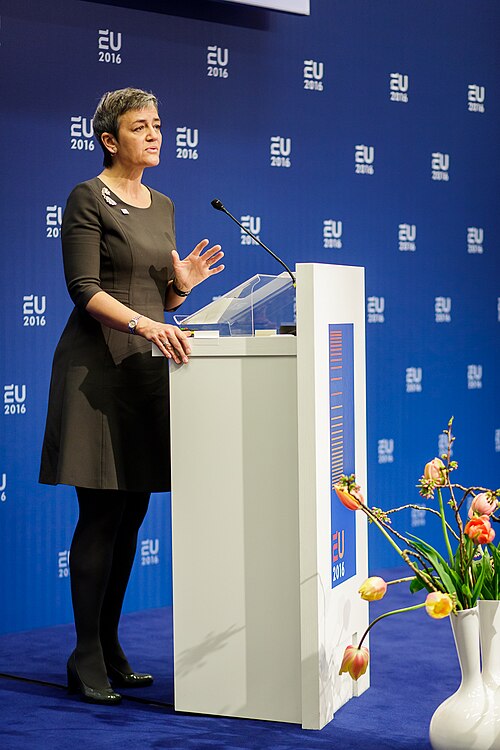
Margrethe Vestager
Former EU Competition Commissioner (2014–2024)
Argues digital and AI markets are uniquely susceptible to lock-in and concentration; competition policy is the primary tool to keep AI markets contestable.
Markets only work when consumers have choice. Where AI is built on top of existing digital monopolies, competition policy has to extend with it.
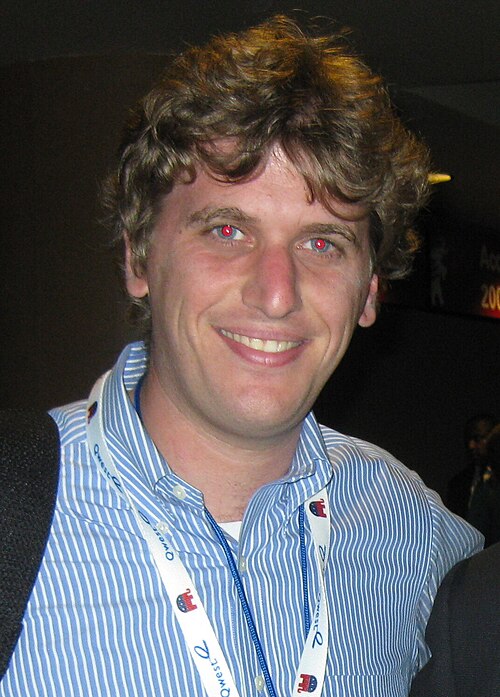
Matt Stoller
Open Markets Institute; BIG newsletter
Argues frontier AI is being built on top of unlawful monopolies in cloud, search, and ads; treats existential-risk framings as cover for incumbent capture of regulation.
AI is not a separate problem from monopoly. It runs on monopoly clouds, on monopoly data, sold through monopoly platforms. You can't regulate AI unless you take on those monopolies first.
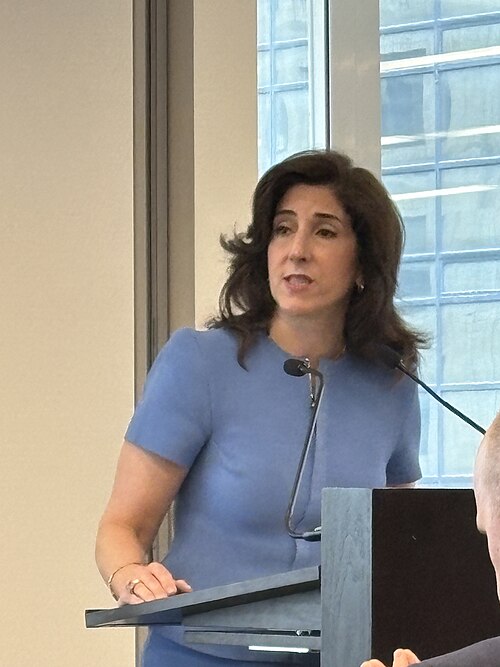
Meredith Whittaker
President of Signal; co-founder of the AI Now Institute
Advocates structural remedies to AI corporate concentration, breaking up infrastructure and compute oligopolies.
AI is, at present, an industry of eight or nine companies. That concentration is the problem.
Rana Foroohar
Financial Times associate editor; CNN analyst
Argues AI is amplifying existing problems of platform concentration and labor displacement; calls for vigorous antitrust enforcement and stronger industrial policy.
AI without antitrust is platform monopoly with extra steps. Either we treat AI as a competition issue, or we accept that the next economic regime will be set by a small number of unaccountable companies.
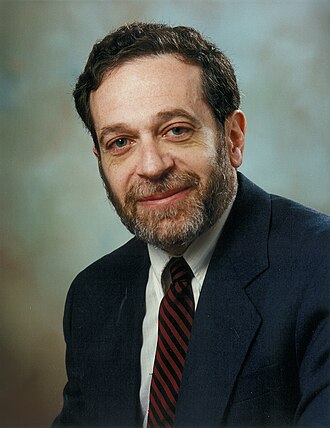
Robert Reich
Former US Labor Secretary; UC Berkeley professor
Argues AI concentration reinforces existing oligopolies; calls for antitrust enforcement and labour-market policy responses.
AI will concentrate wealth and power in the hands of a few unless we break up the monopolies before the winners lock in.
Scott Galloway
NYU Stern professor; tech-business commentator
Argues AI will accelerate platform concentration absent aggressive antitrust intervention.
AI will be the biggest consolidation force in the history of capitalism unless we move aggressively on antitrust.
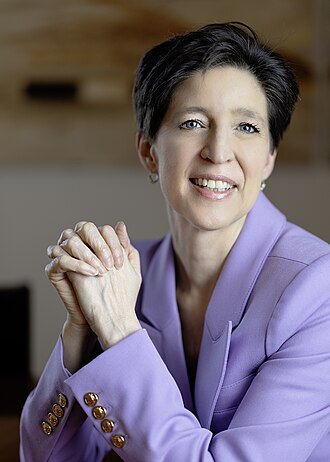
Susan Athey
Stanford economist; former DOJ Antitrust chief economist
Brings rigorous ML-and-causation thinking to AI antitrust; argues market structure around AI demands serious antitrust analysis.
Causal inference plus machine learning is changing how we understand the impact of AI in markets.
Tim O'Reilly
O'Reilly Media founder; tech-publishing veteran
Argues AI is reshaping the economy and the question is who owns the resulting economic surplus. Pushes for antitrust intervention.
We are creating an economy where the algorithms and the people who own them get the lion's share. Antitrust is the answer to that.

Tim Wu
Columbia Law; ex-Biden NEC special assistant on tech competition
Argues AI policy should center antitrust enforcement; existing concentration in compute, talent, and distribution makes the leading frontier labs a natural target of competition law before they entrench further.
When we let a small number of firms control essential resources, the consequences are not merely economic. They become social, political, and now, with AI, epistemic.
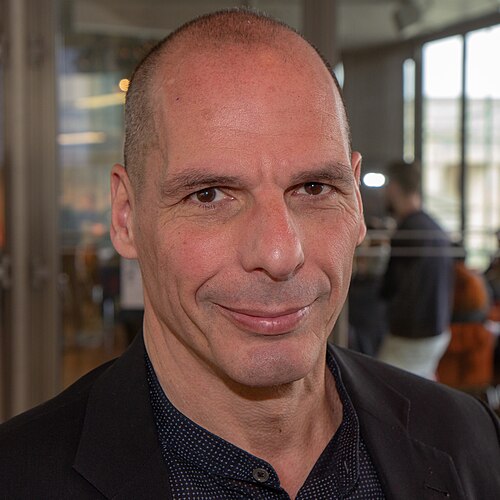
Yanis Varoufakis
Greek economist; 'Technofeudalism' author
Argues platforms have replaced markets, that AI is the next layer of this restructuring, and that meaningful AI policy must address the underlying property and rent extraction patterns.
Technofeudalism describes the situation in which a handful of platform owners extract rent from the rest of us through algorithmic infrastructure we have come to depend on. AI is the next chapter, not a separate story.